


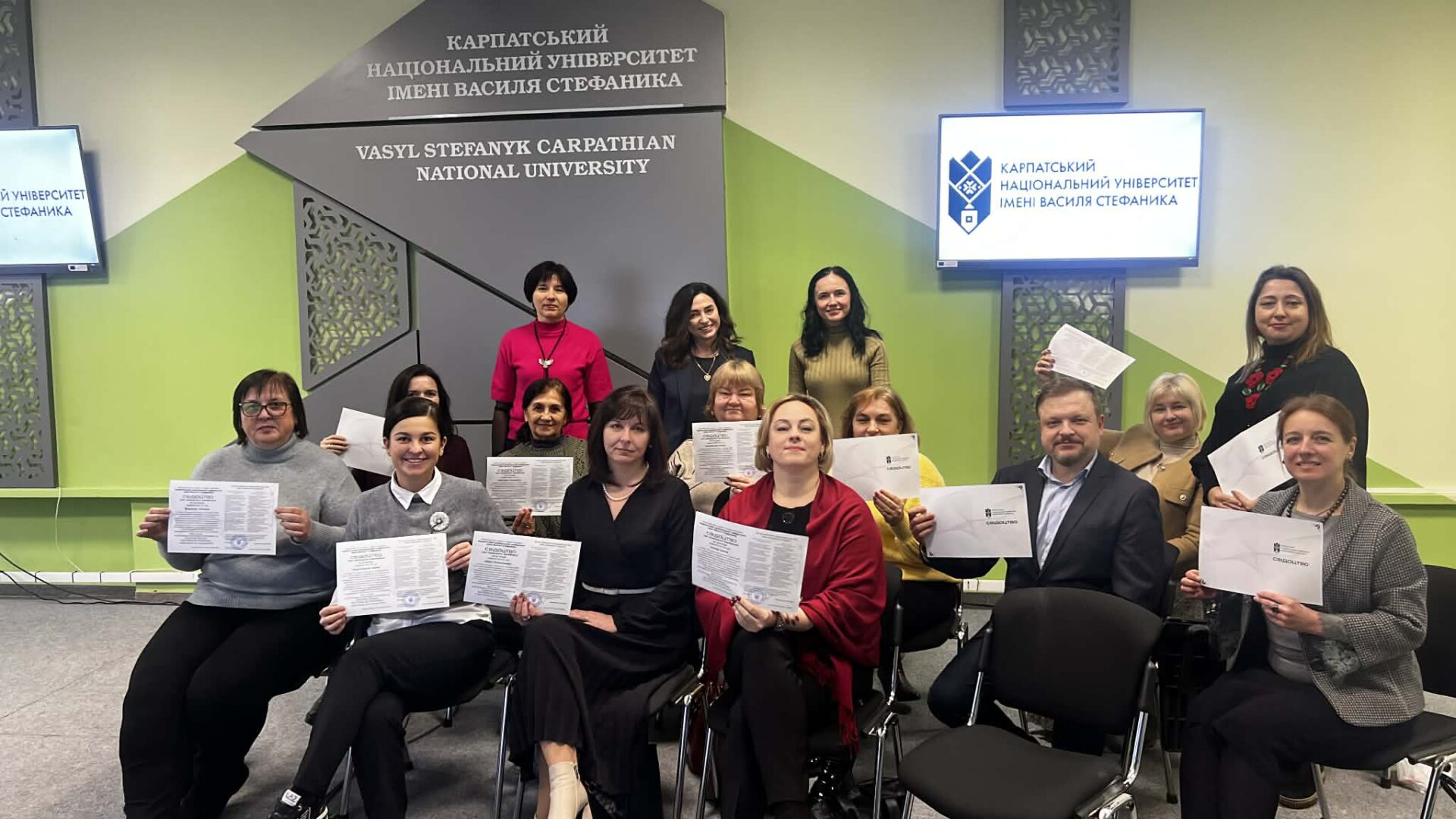
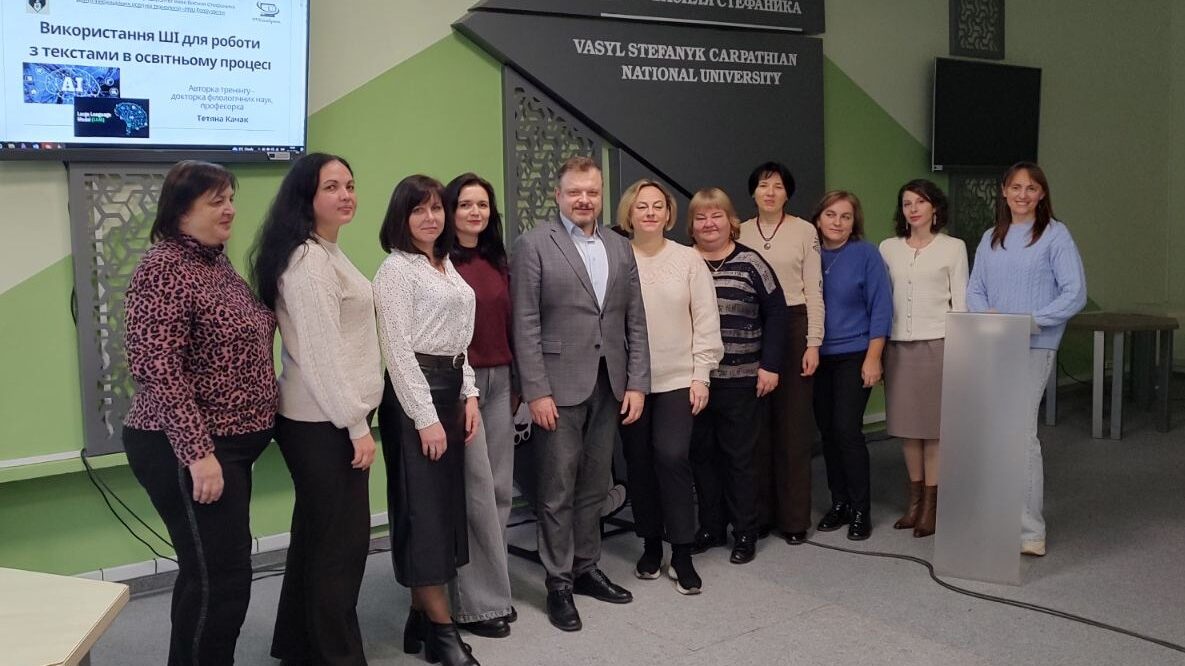
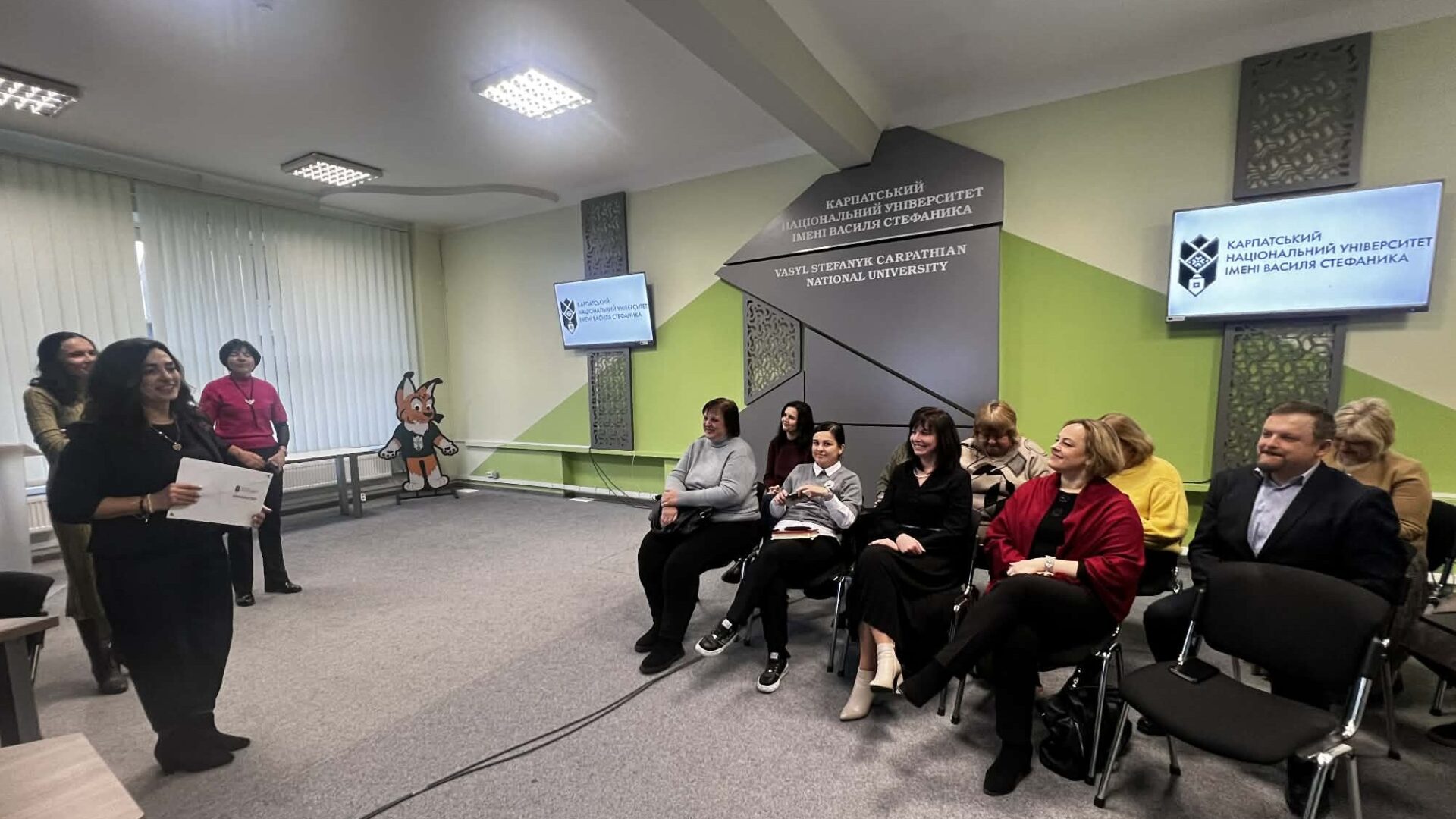
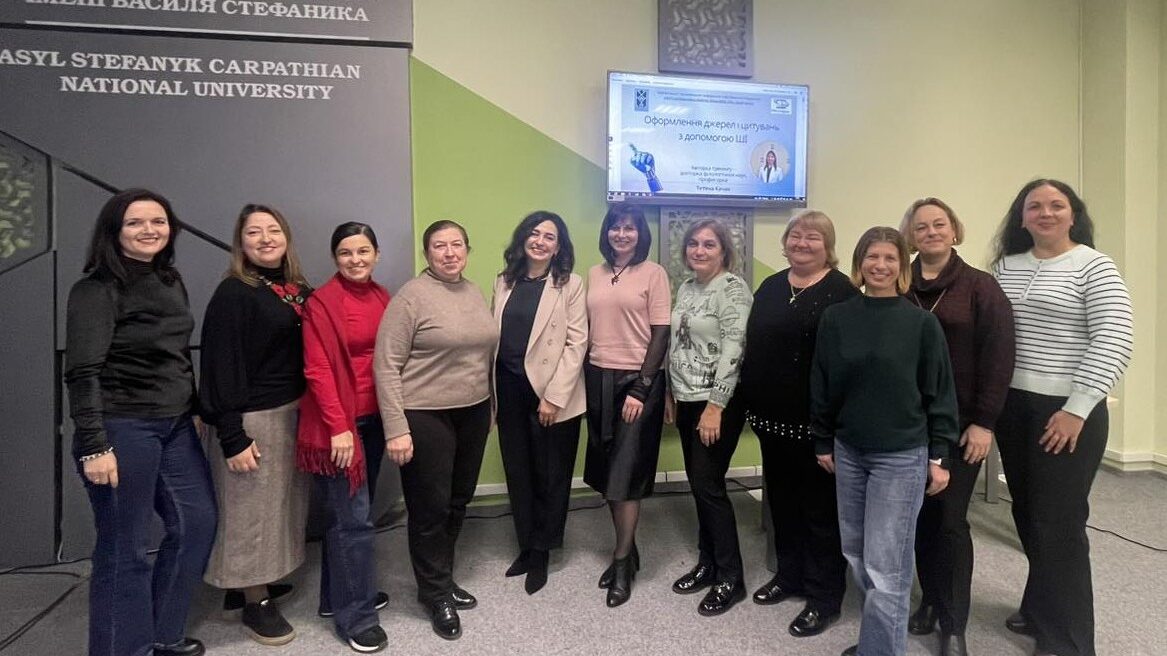
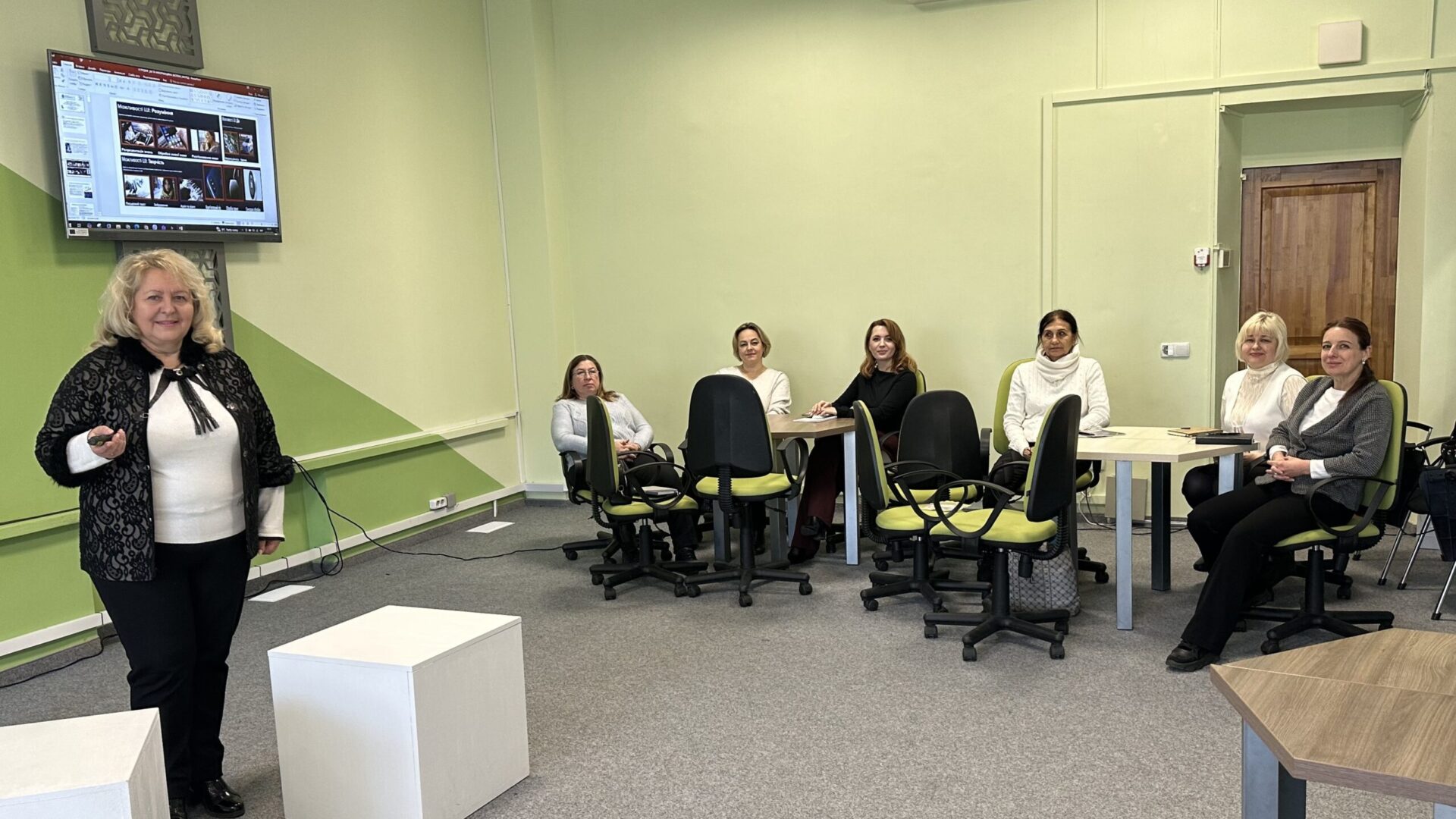
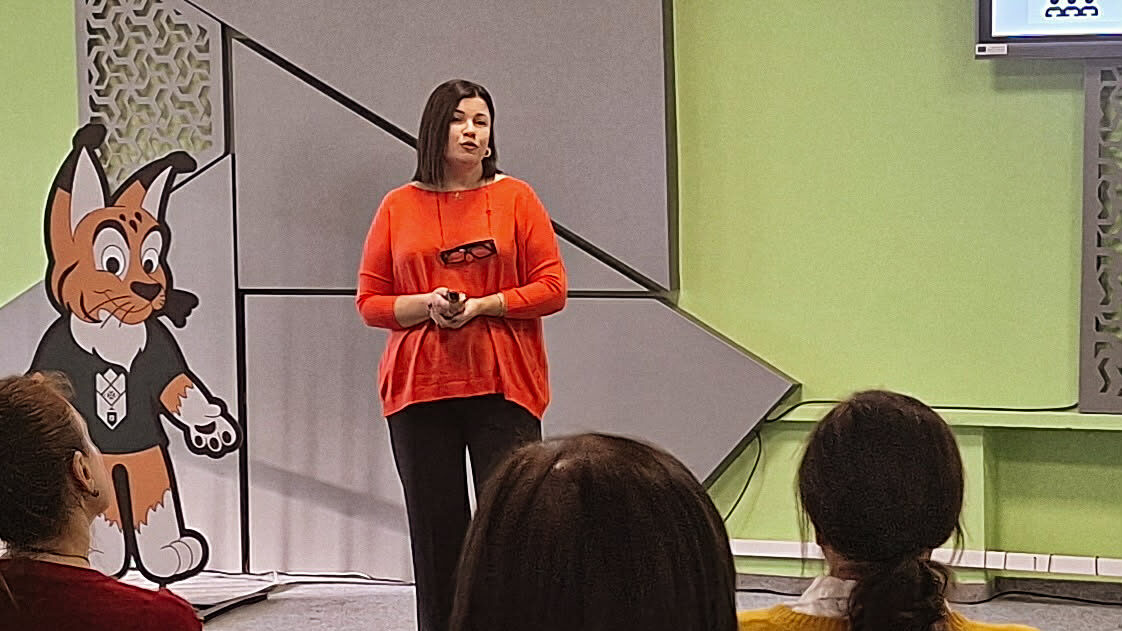
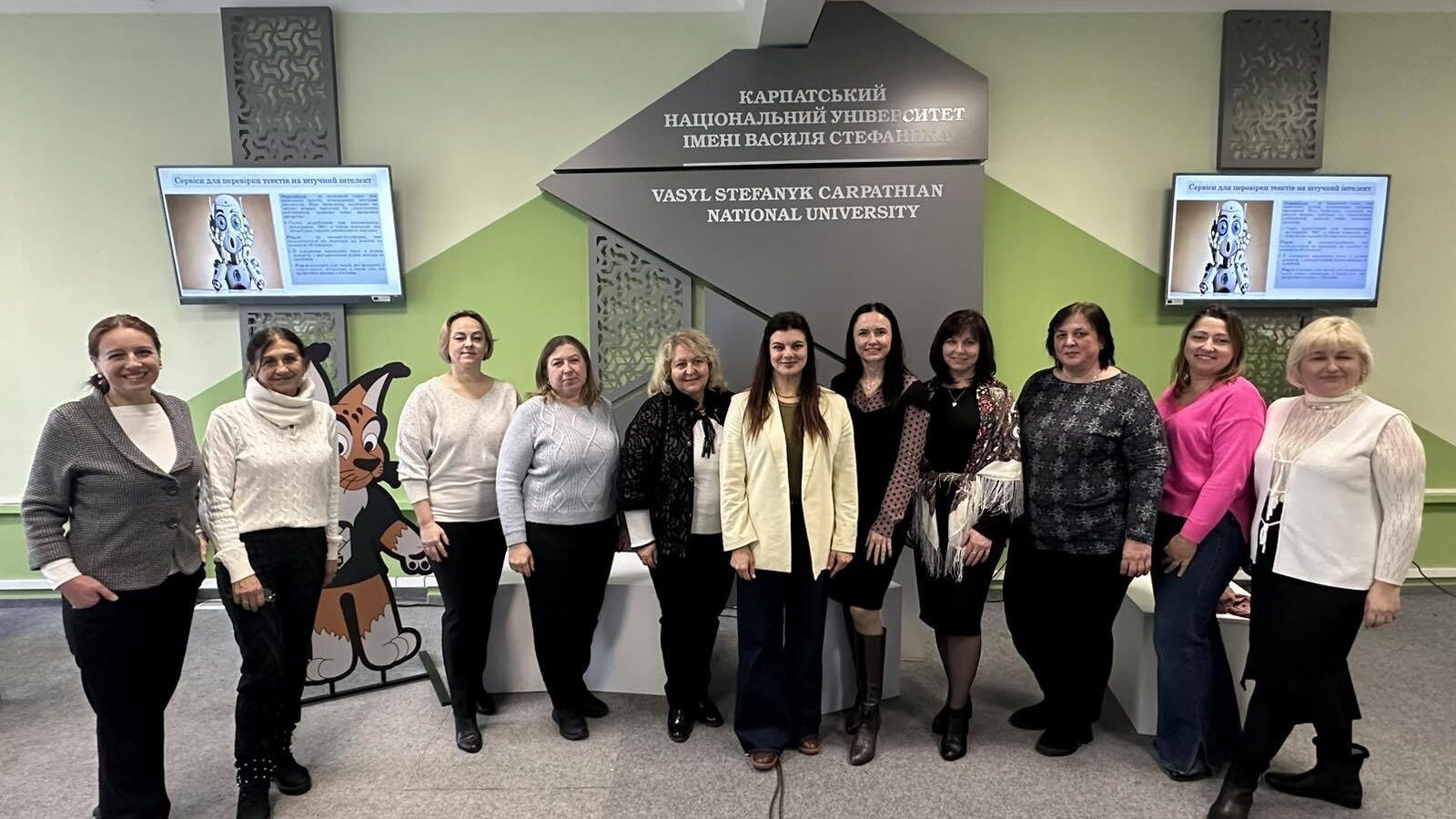
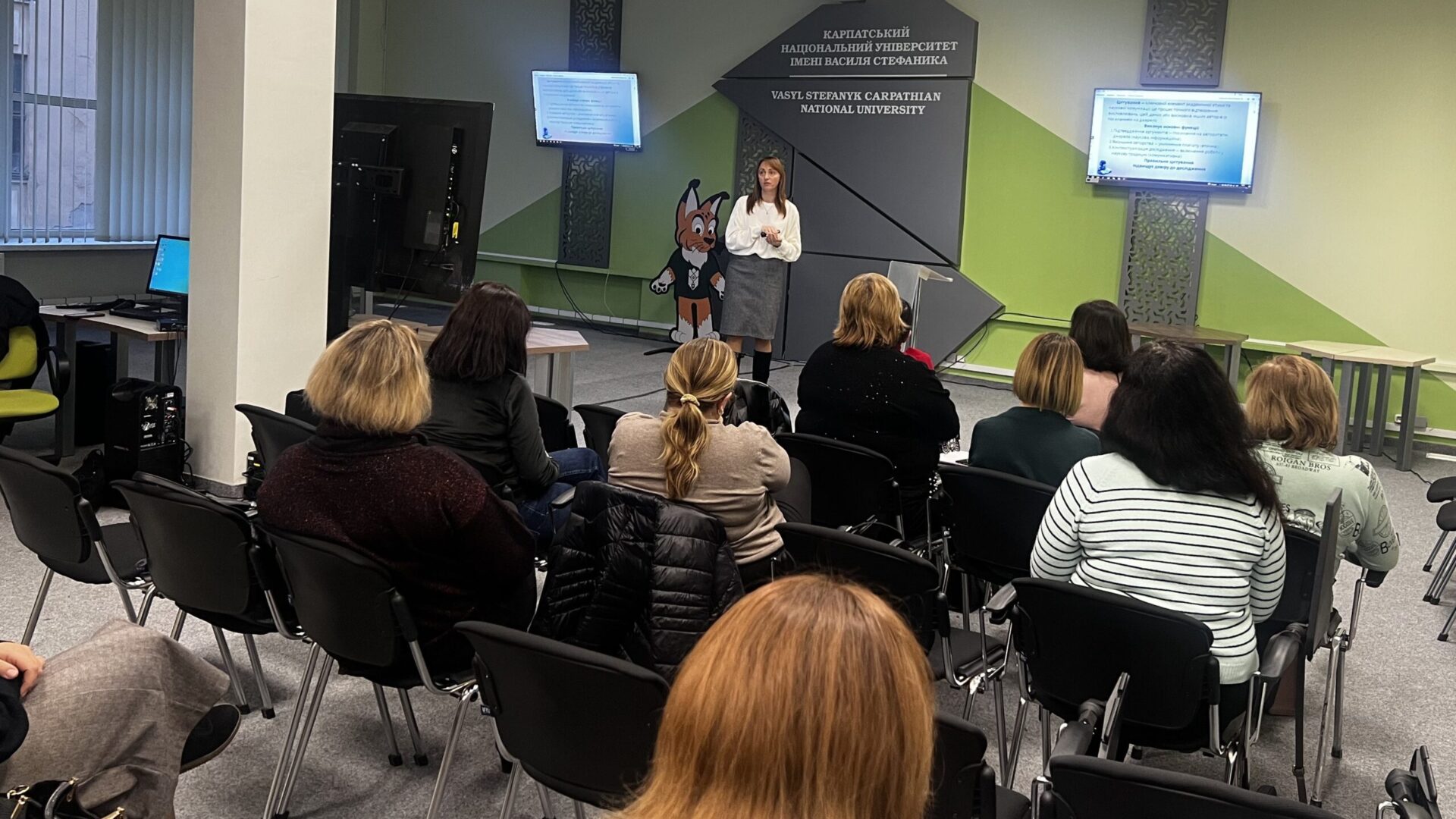
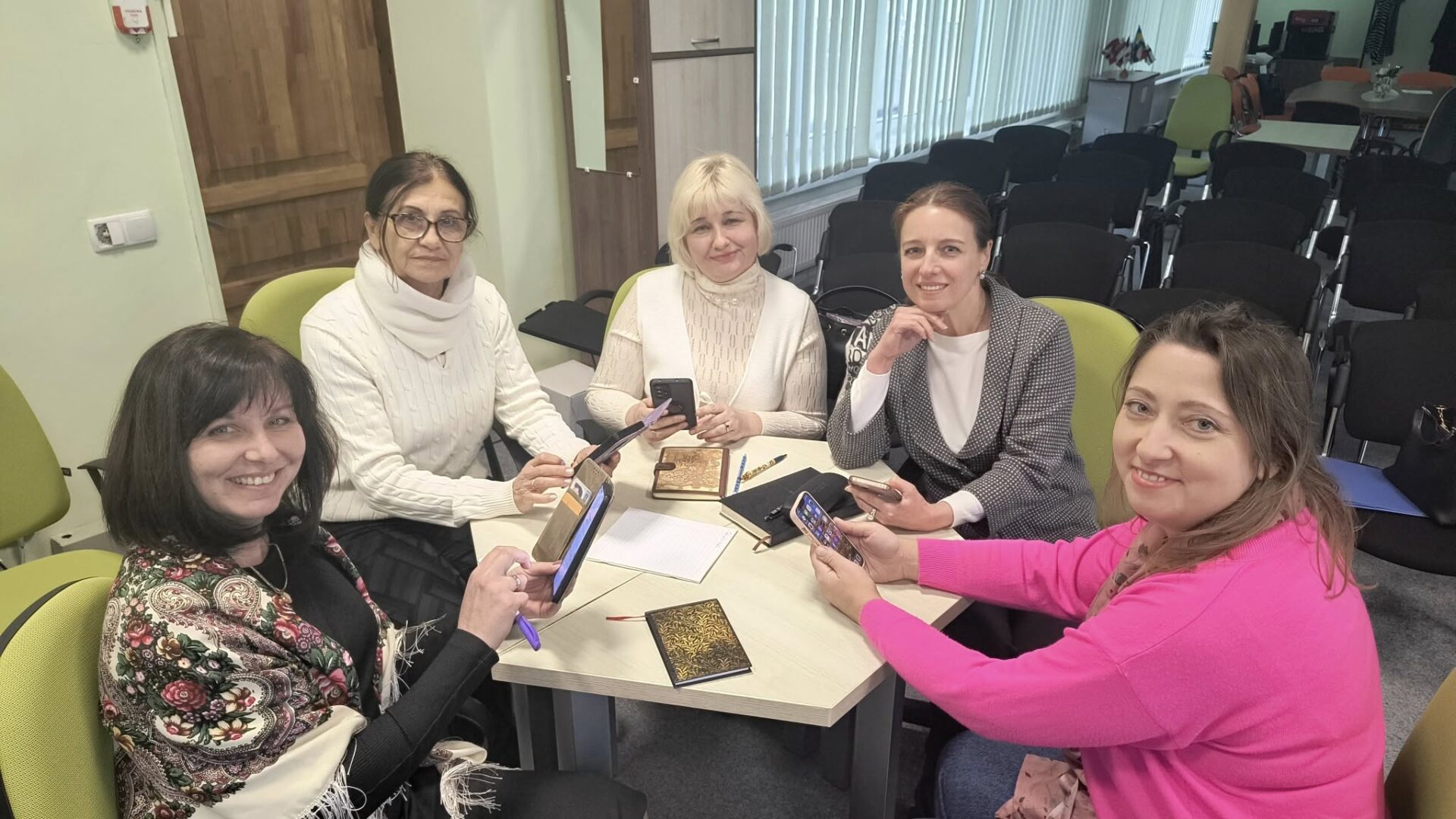
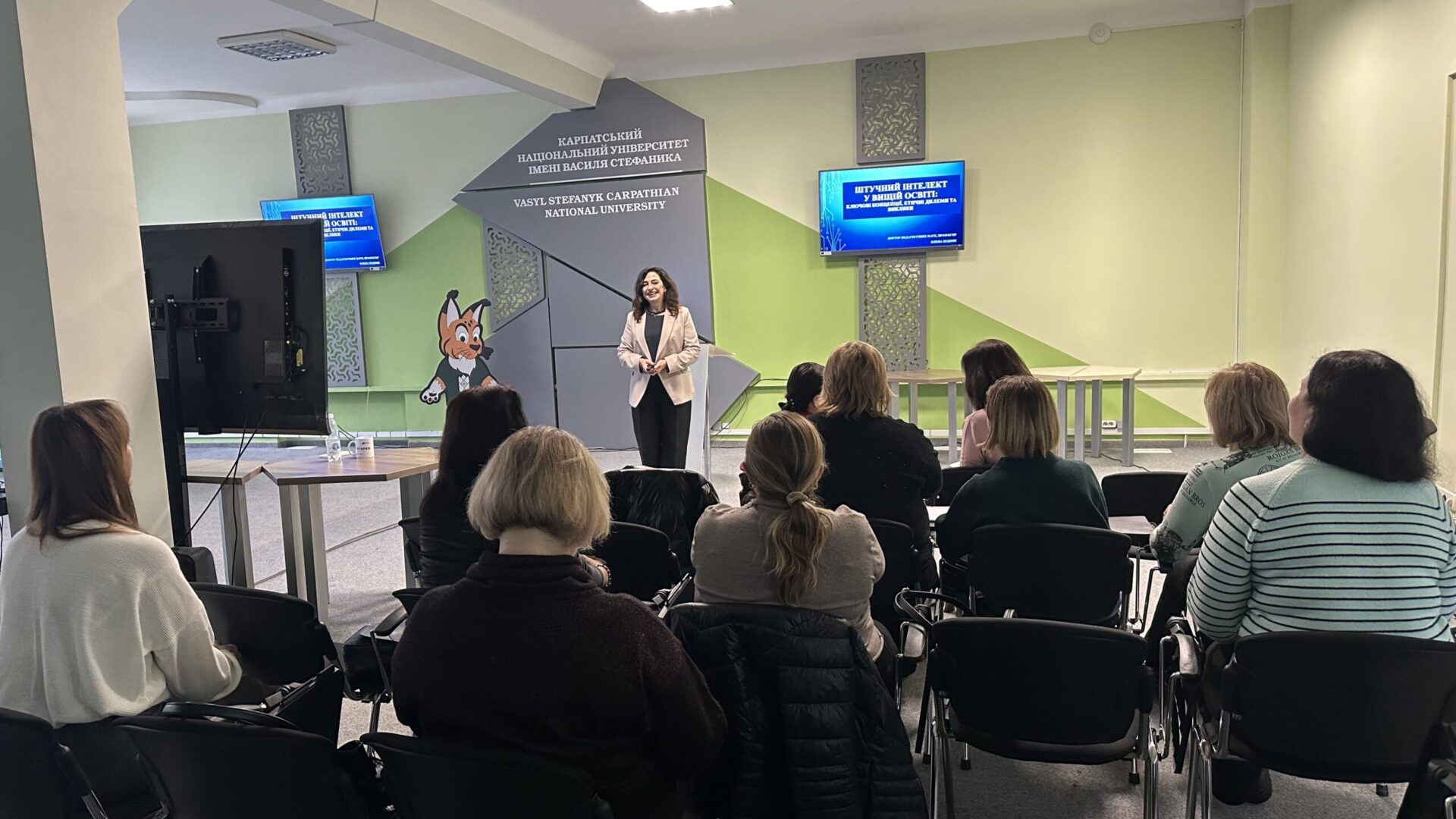
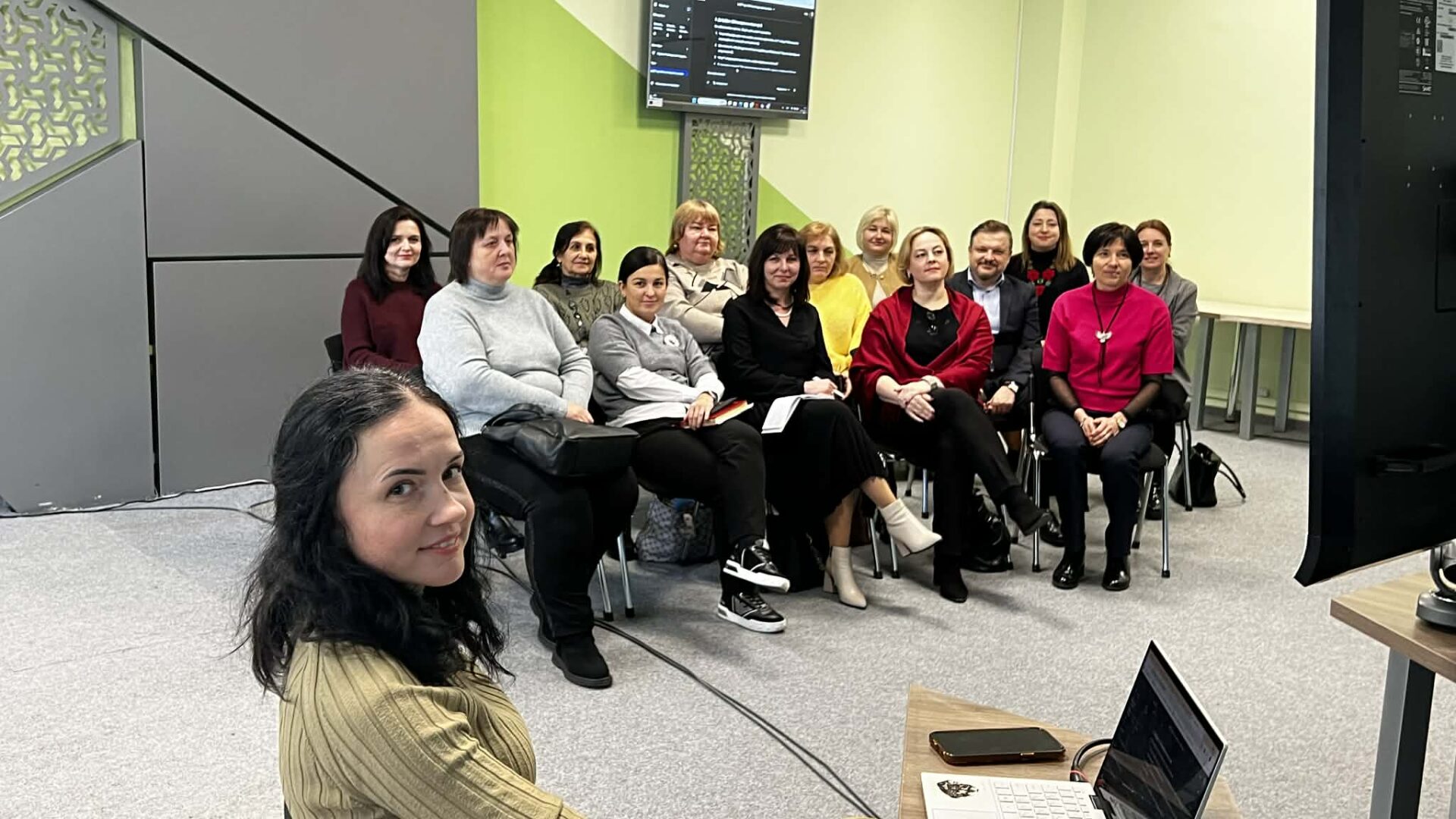
From December 4 to December 16, 2025, the “PNU EcoSystem” Center for Innovative Educational Technologies at the Carpathian National University hosted professional development courses for academic staff on the topic: “Integration of Artificial Intelligence in the Educational Process: From Theory to Practice.” The training was state-funded through a national procurement program for the professional development of specialists in specific economic sectors and public sector employees. This initiative was made possible following the successful selection by the Ministry of Education and Science of Ukraine of the professional development program for higher education faculty, developed by the “PNU EcoSystem” team (Lead Developer: Prof. Olena Budnyk).
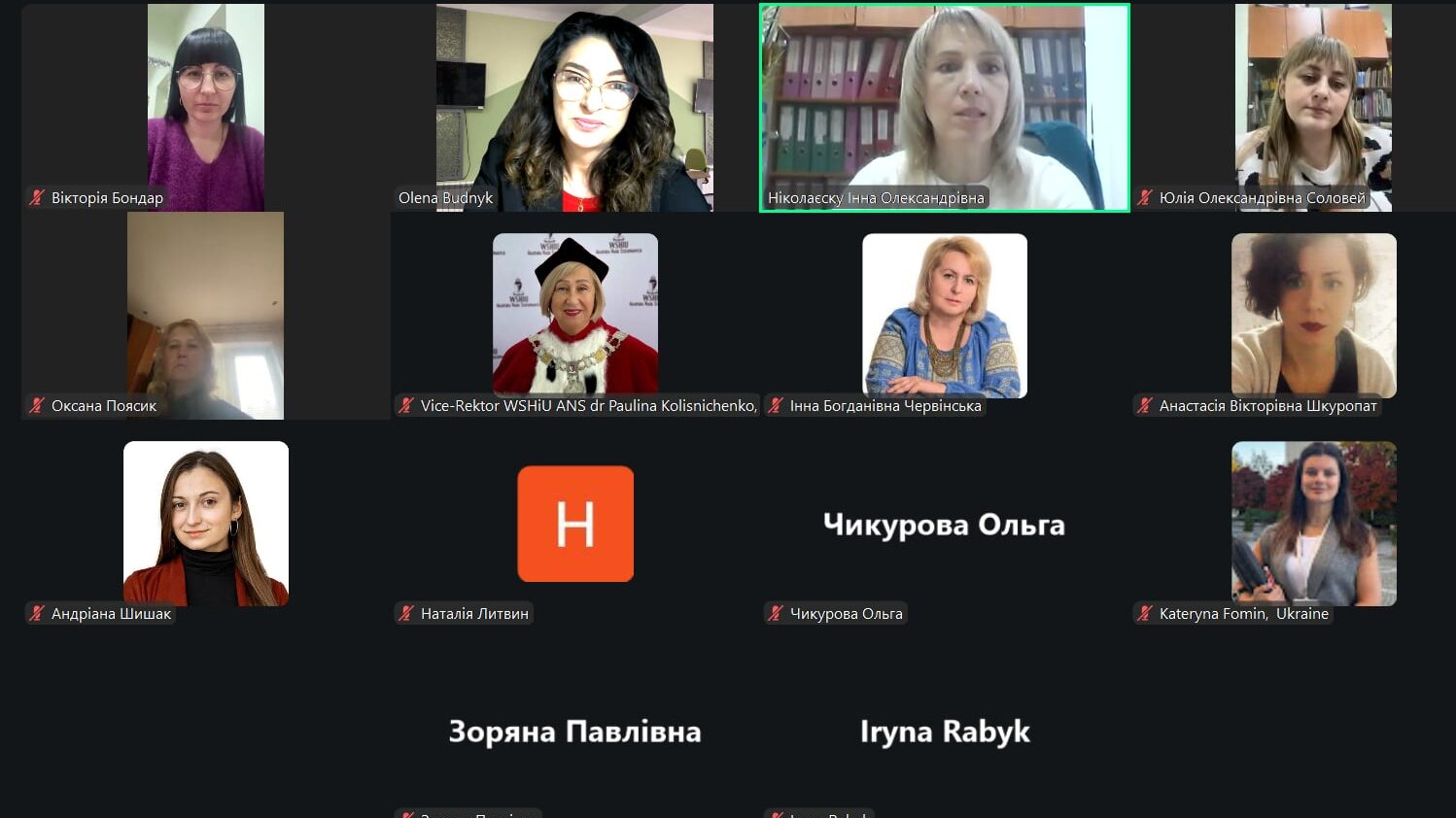
Two simultaneous groups (in-person and remote) explored methods of applying AI in research and education. The courses brought together 60 participants, primarily representing Vasyl Stefanyk Carpathian National University, as well as colleagues from other prestigious institutions, including: Ivan Franko National University of Lviv; Kherson State University; Bohdan Khmelnytsky National University of Cherkasy; Ivano-Frankivsk National Medical University; West Ukrainian National University; Lesya Ukrainka Volyn National University; Yuriy Fedkovych Chernivtsi National University; Kolomyia Training and Research Institute; Institute of Ecology of the Carpathians; M.G. Kholodny Institute of Botany of the NAS of Ukraine.
The training series covered both theoretical and practical aspects of AI implementation in university teaching and research. The curriculum focused on enhancing innovative, ICT, and media-digital competencies, specifically the ability to: analyze opportunities, challenges, and ethical risks of AI in education, and implement AI in distance learning to monitor student progress (Prof. Olena Budnyk); master effective prompt engineering for creating and adapting educational content (Assoc. Prof. Viktoriia Gniezdilova); integrate infomedia literacy using AI into the educational process (Prof. Inna Chervinska); utilize modern digital services for scientific research, publication analysis, and text processing (Prof. Tetiana Kachak); personalize learning through AI to tailor individual student educational trajectories (Assoc. Prof. Tetyana Blyznyuk); design educational courses using AI to optimize the learning process (Assoc. Prof. Kateryna Fomin); create and adapt multimedia educational content using generative AI tools and gamification technologies (Assoc. Prof. Tetiana Mykytyn).
Upon successful completion of the final assessment, all participants were awarded Professional Development Certificates (30 academic hours / 1.0 ECTS credit).